The world is getting warmer, and the heat is no longer just an inconvenience—it’s a threat. From our daily routines to the world of professional sports, we are entering a new “hot zone” where once-pleasant activities are becoming difficult, even dangerous.
My recent trip to London this July was a stark reminder of this, as a city known for its mild summers and lush, green parks showed signs of distress, with patches of brown where vibrant green once was. The classic British sunbather’s fun is being cut short, and a city not built for sweltering heat—with its non-air-conditioned homes and buses—is feeling the strain.
Wimbledon’s Iconic Queue Under Threat
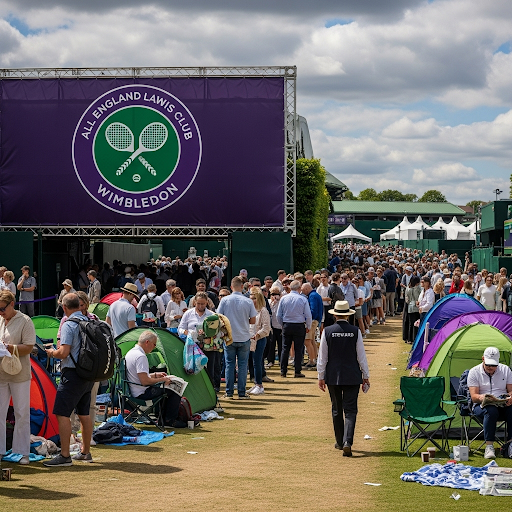
The change was even felt at the historic Wimbledon tournament. The famous “Queue,” where fans gather for hours, has always been a beloved tradition. This year, its comfort was a matter of luck, depending entirely on a cloudy sky. The sun at 5 p.m. was still relentless, making the wait and even watching the matches an uncomfortable experience. The tradition of mild summer picnics at the “Queue” might be in jeopardy without more sheltered areas for fans. Sitting under the sun watching the matches, including the Alcaraz-Sinner final on the evening of 13th July 2025, wasn’t soothing either.
The Ultimate Test: The Cincinnati Open
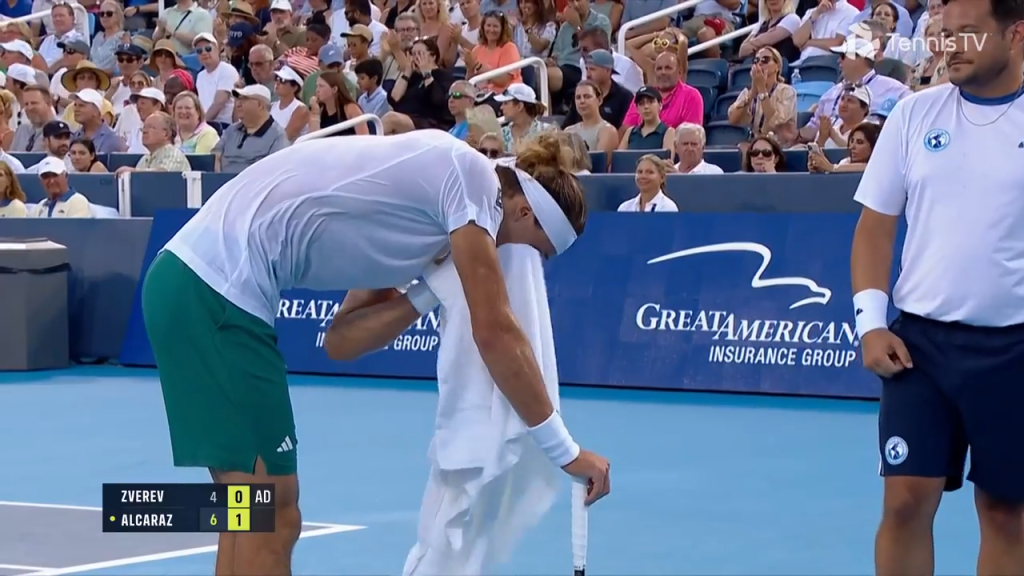
But the most dramatic and unsettling preview of this new reality came at the ATP 1000 Cincinnati Open in Ohio. Just after Wimbledon, the world’s top tennis players gathered for a tournament where every court is open to the sky. With atmospheric temperatures soaring to 32°C (over 89°F) and brutal humidity, the courts became a battlefield. Players weren’t just competing against each other; they were fighting the heat itself.
We watched as top players, the fittest athletes on the planet, pushed to their absolute limits. Jannik Sinner retired from the final, calling it “one of the hottest tournaments ever played.” An exhausted Alexander Zverev seemed to give up in the second set, a silent concession to the overwhelming heat. Francisco Comesana vomited on the side of the court but somehow fought on, while his opponent, Reilly Opelka, called for a doctor, complaining of dizziness and high blood pressure. Most chillingly, Arthur Rinderknech collapsed mid-match, a clear sign that the human body can only take so much. While organizers did their best with big umbrellas, ice towels, and coolers, it’s clear these are only temporary fixes. The tournament culminated on August 18, 2025.
Adapt or End: The Future of Outdoor Sports
This scenario is a frightening wake-up call. The tradition of outdoor sports as we know it may not be sustainable. As temperatures continue to rise, the options are limited, and each one fundamentally changes the nature of the sport:
- Holding matches at night: This would reduce spectator attendance and alter the tournament’s atmosphere.
- Moving tournaments to winter: This would drastically shorten the competitive season.
- Covering open-air stadiums: This would transform outdoor sports into indoor venues, potentially making them financially unviable.
The question is no longer if we will have to adapt, but how. The tennis world, and every other outdoor sport, is on the front lines of climate change. The struggle on the court is no longer just a metaphor; it’s a scorching reality.
The US Open: A Glimpse into the Future?
As the US Open enters its second week in New York, organizers have taken new measures to provide comfort to players. One major concern is the heat absorbed by hard courts during the day, which can make it hotter by 50C to 110C (or about 100 to 200F). than the ambient air. In some cases, the difference can be even more extreme, depending on several factors. It makes playing much more arduous than on grass or clay court.
One small relief is that all singles matches from the quarterfinals onward will be played on courts with retractable roofs.
After the struggles witnessed in Cincinnati, the real question isn’t just about who has the best skills, but who can sustain the fight against the heat—and what the future of outdoor sports will truly look like.
 The Drops and The Deuces
Leave a comment